
The “5 credit card trick” isn’t a single official program — it’s a popular personal‑finance strategy for optimizing rewards, bonuses and category coverage by using five (well‑chosen) credit cards in a coordinated way. The idea: each card covers a set of spending categories where it pays the most (or gives the best perks). By routing purchases to the best card for each category you can raise your effective reward rate, capture sign‑up bonuses when useful, and reduce fees — all while keeping risks and complexity under control.
Below you’ll find: what the strategy typically looks like, exact steps to implement it, a numeric example (with tables and calculations), advantages and disadvantages, comparisons to alternative strategies, and practical tips to manage risks.
1) Typical “5‑card” setup (roles & why each matters)
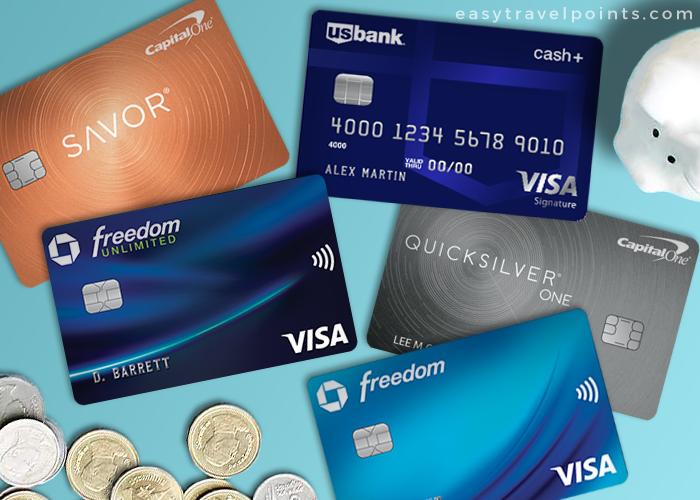
A common configuration assigns each card a role. You don’t need these exact products — the roles are what matter.
- Primary flat‑cashback card — ~2% on all purchases (fallback).
- Groceries / everyday category card — higher % on groceries (e.g., 3%–6%).
- Rotating category card — 5% (or high %) on quarterly rotating categories (often capped).
- Travel / dining bonus card — extra points/cashback on travel & restaurants (good for travel perks).
- Premium card or small‑fee card with specific perks — lounge access, statement credits, or a deep reward in one niche (or a 1.5% universal card to fill gaps).
2) Step‑by‑step implementation (numbered)
- Inventory your spending. Break your annual spending into categories (groceries, gas, dining, travel, utilities, other).
- Pick cards that match your largest categories. Give priority to the card that yields the highest reward where you actually spend most.
- Track rotating categories & caps. If a rotating card offers 5% on a category up to $1,500 per quarter, plan to use it for the first $1,500 of that quarter’s qualifying purchases.
- Automate where sensible. Use autopay and set reminders for category changes or card payoff.
- Watch total fees vs. value. If a card has a $450 annual fee, ensure the perks and extra rewards exceed that fee for you.
- Manage credit health. Keep utilization low, pay on time, and space out new card applications if you care about hard‑credit inquiries and rules like “5/24.”
- Reassess annually. If sign‑up bonuses dry up or your spending shifts, rebalance the five cards.
3) Numeric example — demonstration with real‑looking numbers
Assumptions (example household annual spend = $36,000):
- Groceries: $6,000 per year
- Dining: $4,000 per year
- Travel: $2,000 per year
- Gas: $3,000 per year
- Other (utilities, shopping, bills): $21,000 per year
Sample card roles & reward rates used in the example:
- Card A (Groceries card): 3% on groceries.
- Card B (Flat 2% card): 2% on everything else (fallback).
- Card C (Rotating 5% card): 5% on up to $1,500 per quarter (= $6,000/year cap).
- Card D (Travel/Dining card): 2% (or 2x points) on travel + dining.
- Card E (1.5% backup card): 1.5% on purchases when no other card applies.
How we allocate spending for optimal rewards:
- Groceries ($6,000) → Card A at 3%.
- Dining ($4,000) → Card D at 2%.
- Travel ($2,000) → Card D at 2%.
- Rotating category card (Card C) used to cover $6,000 of qualifying spend in the year (we allocate gas $3,000 + $3,000 of other spend to meet the $6,000 cap). Card C pays 5% on that $6,000.
- Remaining “other” spend after rotating allocation: originally $21,000 other, minus $3,000 used for rotating = $18,000 (but we also used $3,000 of gas in rotating leaving gas $0 uncovered). For simplicity we then route the remaining other $18,000 to Card B (2%).
- Assume $1,000 of miscellaneous ends up on Card E (1.5%) as a small overflow.
Now compute rewards carefully, digit by digit:
- Groceries: 6,000 × 0.03 = 180.
- Dining: 4,000 × 0.02 = 80.
- Travel: 2,000 × 0.02 = 40.
- Rotating card: 6,000 × 0.05 = 300.
- Flat 2% on remaining other: 18,000 × 0.02 = 360.
- Backup 1.5% on misc: 1,000 × 0.015 = 15.
Add them up:
- 180 + 80 = 260
- 260 + 40 = 300
- 300 + 300 = 600
- 600 + 360 = 960
- 960 + 15 = 975
Total annual rewards = $975 on $36,000 spending ≈ 2.71% effective cashback.
For comparison:
- Single 2% card on all spending: 36,000 × 0.02 = $720 annual rewards.
- Gain from 5‑card approach vs single 2% card: 975 − 720 = $255 extra per year.
Note: numbers above are illustrative but computed step‑by‑step. Your real results depend on exact card rates, rotating caps, annual fees, and how well you route purchases.
4) Table: simplified comparison of strategies
| Strategy | Complexity | Typical effective reward (example) | Main pros | Main cons |
|---|---|---|---|---|
| Single flat 2% card | Low | ~$720/year (on $36k) | Simple, low maintenance | Misses category bonuses |
| 5‑card optimized strategy | Medium–High | ~$975/year (on $36k) example | Higher yield, uses category bonuses | More tracking, possible fees, credit inquiries |
| Heavy premium cards + perks | High | Varies (could exceed $975 if you use perks) | Travel perks, lounge access, premium insurances | High annual fees; must use perks to justify fee |
| Sign‑up bonus churning | High | Can give large one‑time gains | Big early value (bonus) | Requires frequent new accounts; complex; may affect credit |
5) Real advantages (what people actually gain)
- Higher effective reward rate. By matching spend to the highest‑paying card you increase the percent back compared with using a single card.
- Capture sign‑up bonuses strategically. If you time applications well and meet minimum spend without waste, sign‑up bonuses can add a large one‑time boost.
- Access to card perks. Travel insurance, purchase protections, extended warranties, lounge access or statement credits can be worth hundreds if you use them.
- Flexibility during category promotions. Rotating cards and new issuer promotions can temporarily increase returns beyond baseline.
6) Real disadvantages and risks
- Credit‑score impact from new accounts. New card applications produce hard inquiries and lower average account age; both can temporarily lower FICO scores.
- Annual fees can eat rewards. A card with a $450 fee must provide at least $450 in additional net value over a no‑fee alternative to be worth it.
- Complexity & human error. If you forget which card to use, you can lose the incremental rewards.
- Sign‑up bonus requirements & churn rules. Issuers have rules (e.g., limits on bonuses, “once per lifetime” rules, or proprietary constraints like Chase’s 5/24) that complicate frequent sign‑ups.
- High interest on balances. Rewards only help when you pay in full each month. Carrying balances with APRs of 15%–25% will erase rewards value quickly.
- Rotating category caps. Cards that pay 5% often restrict the bonus to a relatively low cap (e.g., $1,500 per quarter); beyond that you fall back to a lower rate.
7) Practical cost/benefit checklist before using this strategy (numbered)
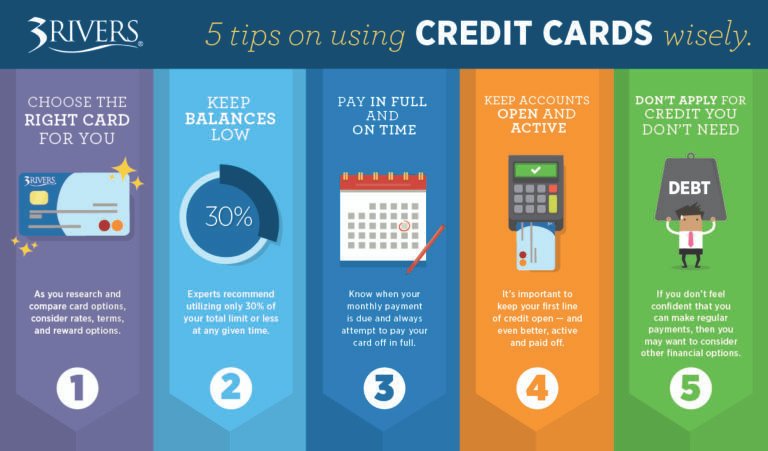
- Do you pay your balance in full each month? If no → stop. Interest blows out any reward.
- Is your monthly spending high enough to justify complexity? If you spend <$1,000–$1,500/month, a single generous flat card might be simpler.
- Can you track cards reliably? Use an app or spreadsheet to map categories → card.
- Watch annual fees: Add up fee dollars and compare to expected extra rewards + perks.
- Plan card applications: Space them to avoid hitting issuer rules and minimize score damage.
8) Comparison with two common alternatives
A. Two‑card strategy (flat 2% + rotating 5%): Simpler than five cards, captures most high‑value rotations and has much less complexity. Often the best compromise.
B. Premium single travel card (high annual fee): If you travel heavily and use all perks, a premium card can beat multiple small cards — but only if you use the credits and lounge access.
9) Tips, tools & best practices
- Use a simple routing chart in your phone: category → card name.
- Set calendar reminders for rotating category changes (quarterly).
- Automate payments to avoid late fees and missed due dates.
- Keep utilization low per card (preferably under 10%–30% on each card).
- Re‑evaluate annually: if a card stops offering value, replace it.
- Monitor issuer rules (some limit how often you can receive bonuses).
- Avoid opening many cards at once; aim to space applications by months.
10) FAQ (short)
Q: How many cards should I keep open?
A: Quality beats quantity. Keep the cards that deliver net value (rewards + perks − fees). Five is a guideline, not a strict rule.
Q: Will this hurt my credit permanently?
A: Short‑term dip is common after new accounts; proper management (on‑time payments, low utilization) usually restores and can even improve scores over time.
Q: Are sign‑up bonuses worth it?
A: Often yes, but only if you meet minimum spend without buying unnecessary items and you don’t pay interest.
11) Final checklist before you start (numbered)
- Confirm you will pay in full each billing cycle.
- Pick cards that match your real spending (not hypothetical categories).
- Make a simple routing rule (paper or phone wallpaper).
- Track rotating categories and caps.
- Evaluate annual fees vs expected rewards and perks.
12) Bottom line
The “5 credit card trick” is a practical approach for increasing rewards by using multiple cards with complementary strengths. When executed carefully it can raise your effective cashback or points value noticeably over a single‑card approach — often by a few hundred dollars a year for a typical household — but it brings complexity and some credit‑management risks. If you prefer simpler finance, a two‑card combination (flat 2% + rotating 5%) may capture most upside with much less fuss.