
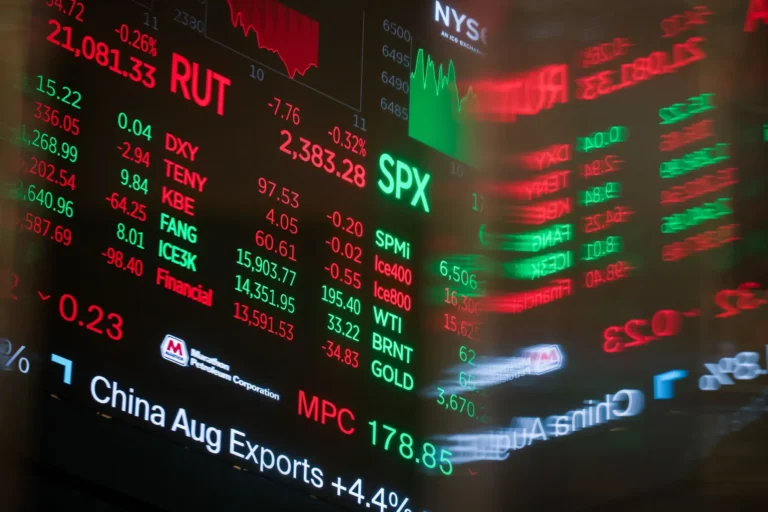
The financial landscape of 2025 has been characterized not by a single, catastrophic event, but by heightened and sustained volatility rooted in the complex interplay of high-interest rates, geopolitical uncertainty, and emerging credit market stress. Wall Street’s current crisis is less about liquidity (as in 2008) and more about credit quality, duration risk, and economic deceleration under persistent policy friction.
This analysis examines the verifiable data and key market phenomena defining the current situation.
I. The Policy and Macroeconomic Backdrop
The core driver of 2025 market tension is the shift in global and domestic policy, which has created uncertainty regarding both inflation and growth.
A. Federal Reserve Policy Pivot (Monetary Influence)
Following an extended period of tight monetary policy, the Federal Reserve (Fed) initiated its first rate cut of the year in September 2025 (e.g., a 25 basis point cut), lowering the target range to 4.00% to 4.25%. This move, while providing market relief, amplified concerns about the underlying health of the labor market.
Table 1: Key U.S. Economic Indicators (Q2-Q3 2025)
| Indicator | Q2 2025 Value | Q3 2025 Forecast/Actual | Relevance to Wall Street |
| Real GDP Growth (Annualized) | +3.8% | +3.9% (Projected) | Indicates continued, yet modest, expansion. |
| Inflation (PCE) | > 2.5% | Sticky, Above 2% Target | Pressures the Fed to limit further rate cuts. |
| Unemployment Rate | Remains low | Signs of Softening | A key trigger for the September rate cut (risk management). |
Data Source: U.S. Bureau of Economic Analysis (BEA) and Federal Reserve Bank of Atlanta (GDPNow).
B. Geopolitical and Trade Policy Shocks
Market volatility has been acutely sensitive to non-economic factors, notably the resurgence of protectionist trade policies and heightened geopolitical tensions in energy markets. Fears of escalating tariff wars created market shocks, leading to abrupt declines in stock futures (e.g., S&P 500 futures dropping significantly after tariff announcements in Q2). This uncertainty causes firms to delay capital expenditure and reshuffle supply chains, directly impacting corporate profit margins.
II. The Regional Banking and Credit Stress
The most palpable evidence of financial stress on Wall Street in 2025 has been observed among regional U.S. banks and in specific credit markets. This resembles the regional banking crisis of 2023, but the stressor has shifted from interest rate exposure to credit quality.
A. Non-Performing Loans and Write-Offs
In October 2025, the stock market experienced a sharp sell-off in bank shares globally following disclosures from several U.S. regional banks regarding significant loan issues.
Table 2: Regional Bank Stress Indicators (October 2025)
| Bank / Entity | Issue Disclosed | Magnitude | Market Impact |
| Zions Bancorporation | Charge-off on two bad loans. | $50 Million | Stock price plunge (>10% intraday). |
| Western Alliance | Legal proceedings over a fraudulent borrower. | $100 Million (Bad Loan) | Stock price dropped (>9%). |
| First Brands Bankruptcy | Bankruptcy filing by a major auto parts supplier. | $10B – $50B Liabilities | Raised systemic concerns over «shadow banking.» |
Data Source: Corporate Disclosures and Financial News Aggregators.
These incidents, though seemingly isolated, raised «broader questions over potential credit quality issues after a lengthy period of elevated rates,» as stressed by analysts. The fear is a domino effect where losses in automotive lending or private credit spiral into the broader banking sector.
B. The VIX and Market Fear
The VIX Index, often called the «fear index,» reflects market expectations of volatility. Its surge in Q4 2025 confirms the elevated state of investor anxiety.
- VIX Index Surge (Example): The VIX index surged by more than 22% in a single day during mid-October 2025, reaching its highest closing level since April. This movement signals a widespread market demand for insurance against further losses.
III. The Commercial Real Estate (CRE) Vulnerability
The commercial real estate sector, particularly the office market, remains a significant source of systemic risk, though the industrial and retail sectors have shown resilience.
- Office Vacancy Rate: The U.S. national office vacancy rate is forecasted to end 2025 higher than previous projections, reflecting soft demand and geopolitical/economic uncertainty.
- The «Prime» Divide: While overall vacancies are high, the market is severely bifurcated. Prime office space in key submarkets (e.g., Midtown Manhattan, Silicon Valley) continues to outperform, often reporting low single-digit vacancy rates, while older, non-prime buildings face significant valuation distress.
- Investment Opportunities: The instability is creating opportunities, with industry leaders identifying «office bargains» and investments in workforce housing development as potential growth areas for 2025.
The 2025 «crisis» is a sophisticated stress test, exposing fragilities built up during years of low rates.
Verifiable Advantages Amidst Crisis:
- Transparency: The crisis has been amplified by the immediate transparency of corporate disclosures (e.g., Zions’ charge-off), forcing regulators and markets to react swiftly, potentially preventing a slower, more toxic buildup of risk.
- Asset Class Rotation: The period is defined by a flight to quality. Gold has hit new record highs (e.g., a weekly gain of over 8.5% in October 2025), demonstrating its superior function as a safe-haven asset during credit jitters.
- Active Management: The extreme volatility makes passive, index-based strategies vulnerable and rewards active fund managers who can strategically rotate portfolios toward defensive sectors and value stocks, moving away from overstretched, AI-related growth equities.