

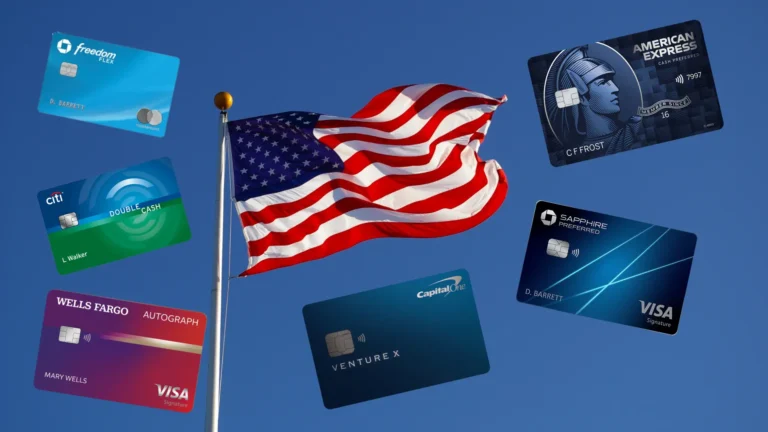
The credit card system in the United States is arguably the most dominant in the world, serving as the backbone for consumer credit, lending, and the all-important credit score. Understanding how credit cards function is not just about making purchases; it is about mastering the mechanisms that determine your financial opportunities—from securing a mortgage to renting an apartment.
This comprehensive guide breaks down the essential facts, mechanics, and terminology required to navigate the American credit card landscape effectively.
Part I: The Mechanics of Revolving Credit
A credit card is a form of revolving credit, which means the line of credit renews as the debt is paid down, allowing the user to borrow funds repeatedly up to a preset credit limit.
1. The Transaction Process
The moment you swipe, tap, or enter your card details, a complex, real-time communication occurs involving four parties:
- The Merchant/Acquirer: The retailer and their payment processor.
- The Payment Network (e.g., Visa, Mastercard, Amex, Discover): This network routes the transaction data.
- The Card Issuer (e.g., Chase, Citi, Wells Fargo): The bank that grants the credit and manages the account.
- The Consumer (You): The cardholder.
The issuer instantly verifies the card’s validity and available credit. If approved, the issuer pays the merchant, and you become indebted to the issuer.
2. The Billing Cycle and Grace Period
The billing cycle is the period of time (usually 28 to 31 days) between monthly statements. The grace period is the most critical feature for responsible use.
- Grace Period: This is the period (typically 21 to 25 days) between the end of your billing cycle and the payment due date. If you pay your full statement balance by the due date, you will not be charged any interest on those new purchases. This makes the credit card, in effect, an interest-free short-term loan.
- Loss of Grace Period: If you carry any balance over from one month to the next (i.e., you do not pay the full statement balance), you usually lose the grace period on all future purchases. This means new purchases begin accruing interest immediately from the date of the transaction.
Part II: Understanding Costs and Payments
The primary costs of a credit card are the Annual Percentage Rate (APR) and various fees.
1. The Annual Percentage Rate (APR)
The APR is the annual cost of borrowing money. In the U.S., most credit cards use a variable APR, which is tied to an underlying index (like the U.S. Prime Rate) and will fluctuate with broader economic conditions.
- High vs. Low APR: The actual APR you receive depends largely on your credit score. Subprime cards often carry APRs above 30%, while prime cards for consumers with excellent credit are significantly lower. The average U.S. credit card APR currently hovers around 21.6%.
- Daily Periodic Rate (DPR): Card issuers calculate interest daily. They convert the APR to a DPR by dividing the APR by 365 (e.g., 21.6% APR / 365 days = 0.059% DPR).
- Interest Calculation: Most U.S. issuers use the Average Daily Balance method. They take the balance each day of the billing cycle, divide by the number of days in the cycle, and then apply the DPR to that average balance.
2. Minimum Payment and The Debt Trap
The minimum payment is the smallest amount you must pay to keep your account in good standing.
- Calculation: Minimum payments are typically calculated as the greater of:
- A fixed dollar amount (e.g., $25 or $35), OR
- A percentage of your outstanding balance (usually 1% to 3%) PLUS the interest and fees accrued that month.
- The Danger: Because the minimum payment is so small, paying only the minimum can trap consumers in debt for years or even decades, with the majority of the payment going toward high interest, not the principal balance.
3. Essential Credit Card Fees
| Fee Type | Description |
| Annual Fee | A yearly fee charged simply for holding the card. Common on premium cards with high rewards. |
| Late Payment Fee | Charged if the minimum payment is not received by the due date. Can be up to $41. |
| Cash Advance Fee | Charged when you withdraw cash using the card. This often incurs a high APR that starts immediately (no grace period) plus a fee (3%-5% of the amount). |
| Balance Transfer Fee | Charged when you move debt from one card to another, usually 3% to 5% of the transferred amount. |
| Foreign Transaction Fee | Charged on purchases made outside the U.S. (typically 2% to 3% of the transaction amount). |
Part III: The FICO Score and Your Financial Identity
In the U.S., a consumer’s credit score is the single most important factor determining access to and cost of credit. The score most widely used by lenders is the FICO Score, which generally ranges from 300 to 850.
Key Factors in the FICO Score Calculation
The FICO Score is derived from the data reported by the three major credit bureaus: Experian, Equifax, and TransUnion.
| Category | Weight (%) | Essential Action |
| Payment History | 35% | Pay every bill on time, every time. Late payments are heavily penalized. |
| Amounts Owed (Credit Utilization) | 30% | Keep your credit utilization ratio (balance divided by limit) below 30%, with the best scores achieved below 10%. |
| Length of Credit History | 15% | The longer your average account age, the better. Avoid closing old, unused accounts. |
| New Credit | 10% | Avoid opening too many new accounts in a short period (this causes a temporary drop). |
| Credit Mix | 10% | Having a mix of credit types (e.g., credit cards and installment loans like a mortgage) is beneficial. |
Crucial Insight: Because Payment History (35%) and Credit Utilization (30%) account for 65% of the score, paying bills on time and keeping balances low are the two most powerful actions for building credit.
Part IV: Where to Find Your Data
U.S. consumers have the right to access their financial data. Knowing where to look is crucial for monitoring financial health.
1. The Credit Report
The credit report is the detailed file maintained by the credit bureaus that lenders review. It contains your payment history, accounts, debt amounts, and inquiries.
- Where to Get It: Federal law mandates that consumers are entitled to a free copy of their credit report from each of the three major bureaus once every 12 months.
- Official Source: You can request these reports online at the only government-authorized website: AnnualCreditReport.com.
2. The Credit Score
While the credit report contains the data, the FICO Score is the three-digit number calculated from that data.
- Where to Get It:
- Card Issuers: Many major U.S. credit card issuers (e.g., Chase, Discover, Wells Fargo) now provide your FICO Score for free on your monthly statement or through your online account portal.
- Credit Monitoring Services: Many services like Credit Karma (which provides a VantageScore, not FICO) or Experian (which often provides its version of FICO) offer free scores.
- MyFICO.com: The official source for purchasing various versions of the FICO Score.
3. Account Statements
Every detail of your card’s costs and activity is legally required to be listed on your monthly statement, including the Schumer Box (the summary of rates and fees required by the Truth in Lending Act).
- Where to Look: Log in to your card issuer’s website, navigate to the «Statements» section, and review the PDF document. This is where you will find your specific APR, fees, and the exact formula used to calculate your minimum payment.
In conclusion, the U.S. credit card system is a powerful financial engine based on leveraging revolving credit responsibly. Mastery lies not in avoiding the card, but in adhering to two core principles: paying the full statement balance every month to maintain the grace period, and diligently monitoring the Credit Utilization Rate to sustain a high credit score.